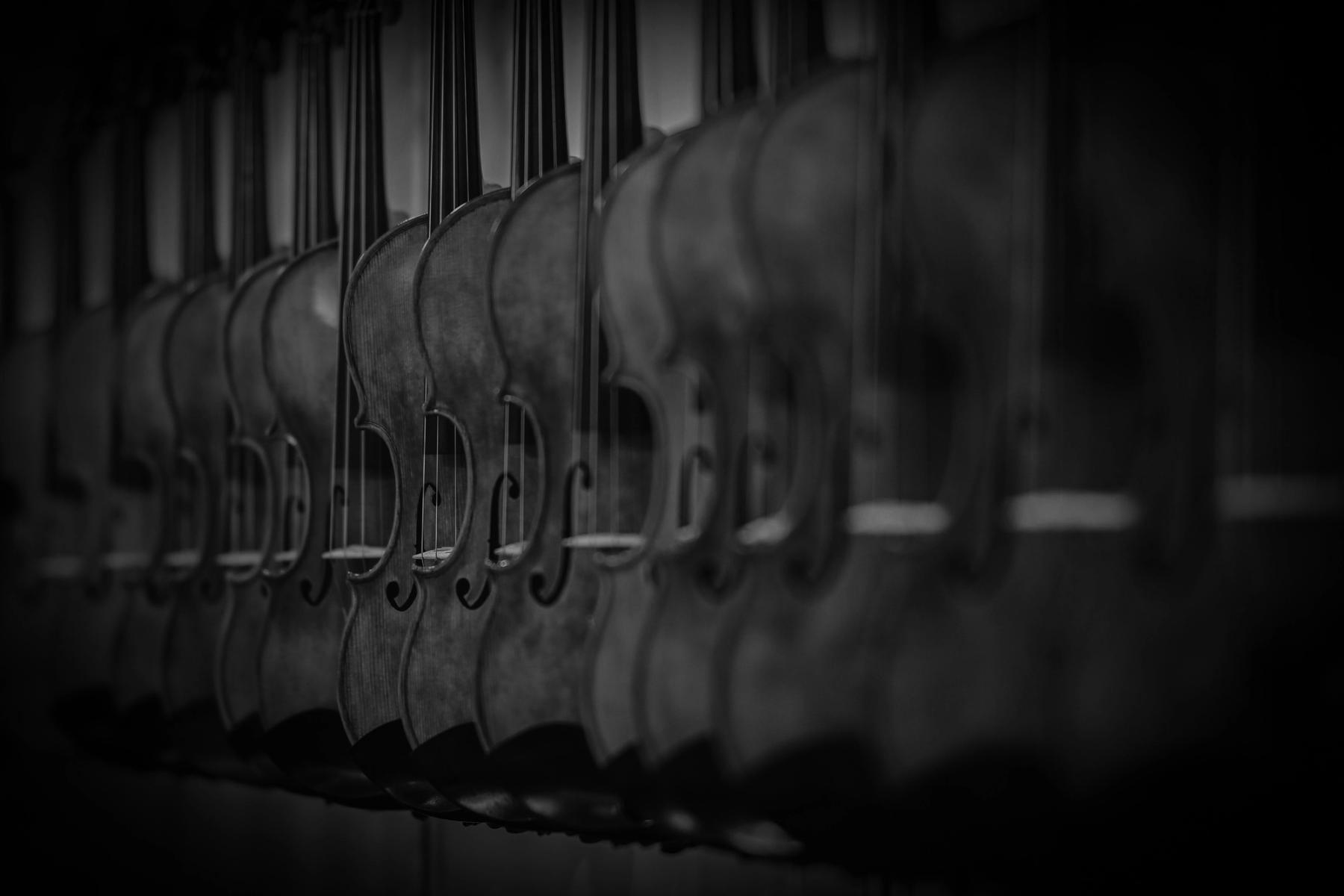
How Strings Transform a Pop Song
The art of arranging
There’s no single way to write strings for pop music. Depending on the song, they can provide support, interact with the vocals, drive the rhythm, add colour or shape its dramatic arc.
Working closely with the artist and producer, the arranger decides not only what the instruments will play, but how they will fit into the production.
A successful arrangement makes the strings feel as though they’ve always belonged in the song.
Five ways strings can shape a pop song
The violin, viola, cello and double bass have an expressive range remarkably close to the human voice. Their ability to sustain a note, shape its intensity and bring a musical phrase to life allows them to interact naturally with the vocals.
In pop, rap and French chanson, strings can serve a variety of roles, often combining several within the same song.
1. Enriching the Harmony: Adding Depth to the Production
Strings can enrich a chord progression without overcrowding the production: the cello provides depth in the lower register, the violas bring movement to the inner voices, and the violins add a lighter, more airy colour.
Careful use of register and voice leading creates a richer harmonic landscape while preserving the balance of the song.
In Lana Del Rey’s Video Games, the strings envelop the piano and vocals, lending the song its melancholic depth. Their sustained lines enrich the harmony without drawing attention away from the voice. Listen, too, for the subtle presence of the harp, which adds a touch of softness, lightness and elegance.
2. Writing a Countermelody: A Dialogue with the Voice
A countermelody is a secondary melodic line that accompanies or responds to the main melody. It can extend a vocal phrase, fill the spaces between lyrics or become a defining motif of the song.
Its writing depends on the space left by the vocals: a word-heavy verse often calls for more restraint than a chorus built around sustained notes.
On Camille Lellouche’s J’ai pas dit, I wrote a violin countermelody that unfolds in the chorus (00:30), weaving through the spaces left by her voice.
In the verses, where the lyrics are more prominent, the strings shift to subtle textures that heighten the underlying sense of unease.
3. Adding Rhythm and Movement
Strings can also become the rhythmic driving force of a song.
Through repeated patterns, pizzicato passages and accented notes, they create a pulse that reinforces the groove and interacts with the drums.
In Viva la Vida, the famous recurring string motif drives much of the song’s rhythmic energy, becoming one of its defining musical features.
4. Creating Texture and Atmosphere
Strings can transform the character of a track when used as a sound design tool.
Harmonics, tremolos, sustained notes and low-register textures offer ways to shape timbre, density and sonic tension.
In Sigur Rós’s Valtari, the strings blend into long, sustained layers of sound, their edges sometimes difficult to distinguish. Rather than simply providing accompaniment, they help create an evolving sonic texture that blurs the line between acoustic and electronic sound.
5. Building Dramatic Tension
By varying their intensity, register and density, strings can shape a song’s dramatic build. A subtle motif can gradually grow in scale, while a sudden silence can make a moment all the more powerful.
In Adele’s Skyfall, the strings evolve from restrained passages into sweeping orchestral crescendos, steadily building tension and giving the song its cinematic grandeur.
How does an arranger decide what to write?
Harmonic support, countermelodies, rhythm, texture or dramatic development: the possibilities are endless. But how do you decide what a particular song needs?
The idea of adding strings often comes from the artist, musical director or producer. Sometimes the brief is specific — a string quartet for the chorus, an orchestral introduction — while other times there is more room for creative freedom.
It all starts with listening and discussing the artistic vision.
As I listen to the track, I imagine how the strings might fit into it, sometimes combining several of these approaches.
The vocal line, the density of the production and the available frequency space all shape my writing. A violin line might sound beautiful on its own, but lose its impact if it competes with the vocals or gets lost among the other instruments.
An arranger writes not just for the instruments, but for the production they become part of.
From solo violin to full orchestra: choosing the right ensemble
Once the role of the strings is clear, the next step is choosing the right ensemble, taking both the artistic vision and budget into account.
A string quartet offers rich, flexible harmonic writing. A trio may suit a lighter texture, while a solo violin or cello can sometimes be all a song needs to establish its character.
This decision is made in close collaboration with the artist and producer, and may lead to exploring other instrumental colours.
For a fully acoustic rendition of Anne Sylvestre’s Les Gens qui doutent, performed by Barcella, I suggested adding a clarinet.
To me, its timbre had something sad, slightly forlorn, almost awkward about it, perfectly suited to the song’s vulnerability.
This reflects an essential part of orchestration: choosing an instrument not only for what it can play, but for what it can express.
From mockup to recording
Once the arrangement is written and the ensemble has been chosen, a mockup allows the artist and their team to hear how the finished piece might sound.
Created from the score using sample libraries, it brings the strings together with the vocals and existing production, allowing everyone to review and refine the artistic choices before recording.
The musicians then bring something no simulation can fully capture: the natural phrasing, the subtlety of each attack, the nuances of tone and those small imperfections that bring the music to life.
An arrangement that serves the song
The art of arranging lies in finding the right place for each instrument, enriching the song without compromising its identity.
Sometimes, just a few bars are enough to make it impossible to imagine the song any other way.
Have a Project in Mind?
Verba Volant Studio works with artists, producers and record labels to create bespoke arrangements and orchestrations for contemporary music.
Working on a single, an album or a live project?