Classical Orchestration for Pop and Film: The Complete Guide
How to transform a modern track using the power, emotion and richness of real acoustic instruments.
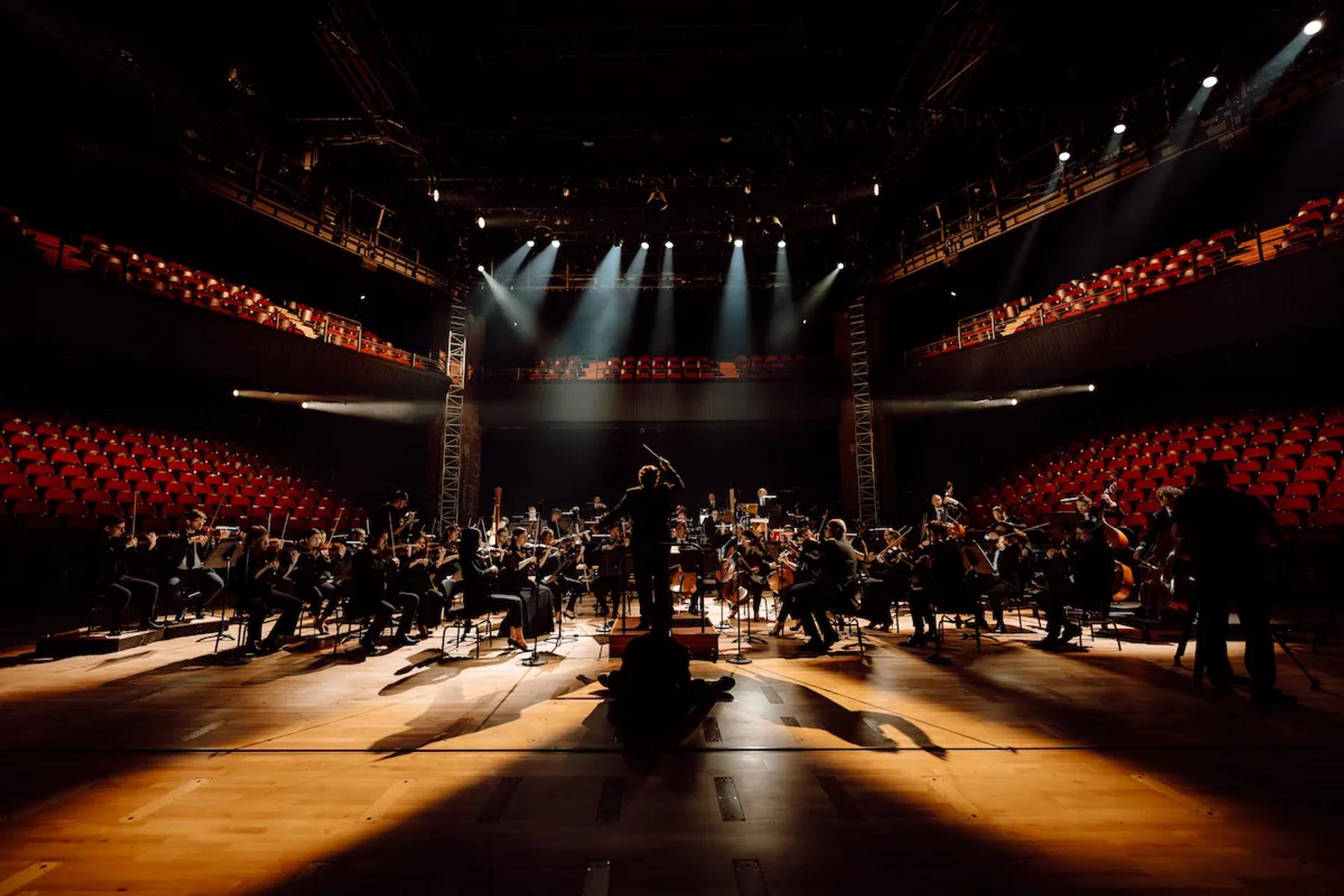
The track has been on loop in the speakers for three days. The topline works, the drums hit hard, the production is clean. And yet.
Something is missing. A tension. A presence. A spark that no synth can manage to find. So we try a few plugins, search for the right sample for hours. But the track still doesn't take off.
The issue might not come from the composition or the mix, but from the very material of the sound. This is precisely where orchestral instruments offer that possibility: bringing movement where everything seems frozen, creating depth without weighing down the arrangement, revealing an emotion that already existed but was still searching for its form.
// Orchestration for contemporary music
This first article explores the fundamentals of contemporary orchestration: the difference between arrangement and orchestration, the role of each family of instruments, the reasons for its resurgence in modern productions, and the key stages of collaborating with a specialist studio.
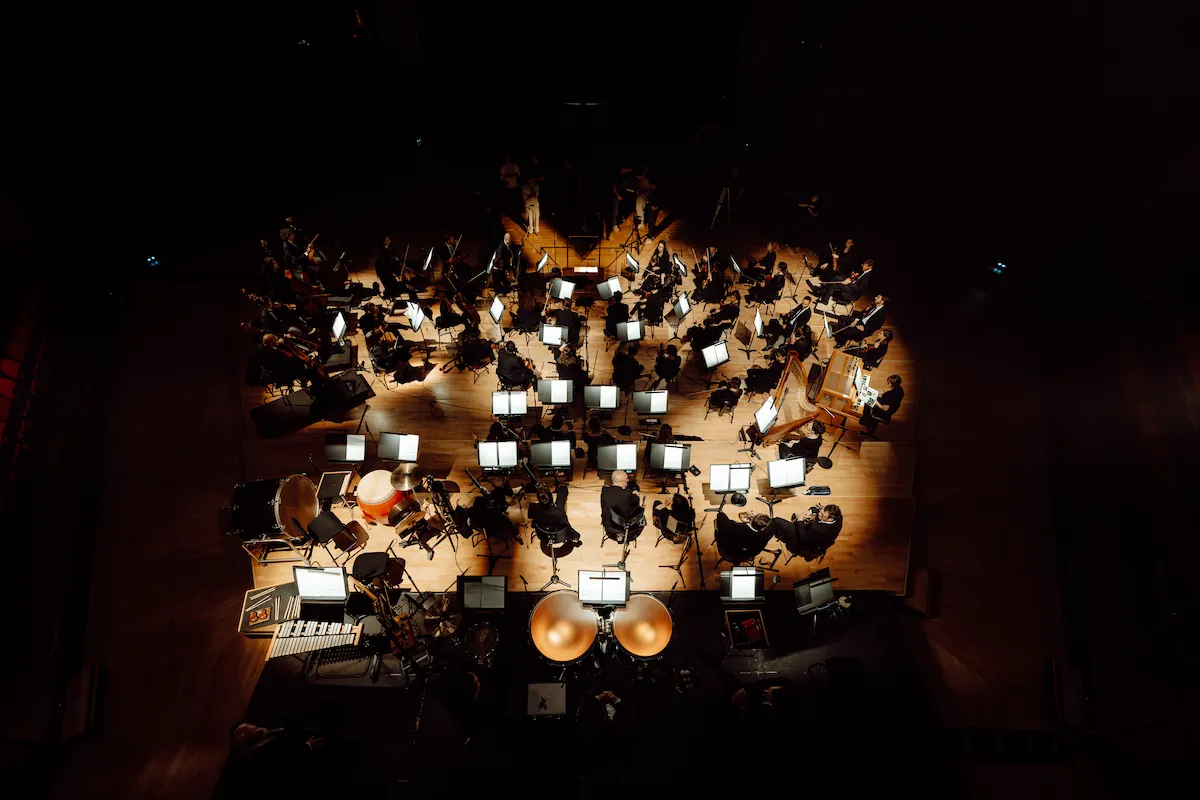
Orchestration, arrangement: what's the difference?
Both terms are often used interchangeably in studio talk. Yet, they correspond to two complementary dimensions of musical creation: arrangement modifies or transforms the track; orchestration gives it a new instrumental palette and expressive depth. In contemporary productions, these two approaches constantly interact, sometimes to the point of merging.
Arrangement
Metamorphoses existing musical material (harmonic grid, melody...) by bringing contrast, movement, and coherence: textures, counter-melodies, dynamics, breaths...
Orchestration
Translates a musical intention into the language of instruments by assigning each line to the timbres that will give it full expression: tempestuous strings here, delicate woodwinds there, powerful brass balancing harmoniously.
In practice, these two disciplines are no longer separated. Just like the arranger, the orchestrator composes: inventing lines, creating a secondary motif, developing a new dynamic, or imagining a musical movement absent from the original demo to express its full potential.
This is why the two concepts are often reunited today under the term arrangement. The profession of arranger-orchestrator consists precisely in navigating between these two dimensions: shaping the musical structure and revealing, thanks to the timbres of the chosen instruments, the unique identity of each project.
Why is the orchestra returning in force in modern music?
Several developments explain this new place given to orchestral instruments.
Rediscovering a living sonic texture
Following years of the widespread adoption of virtual instruments, sound libraries and entirely digital workflows, a new focus is emerging: that of texture, movement and interpretation.
Acoustic instruments offer nuances that are difficult to programme: a slightly different attack on each note, a breath, a natural tension in the bow or the breath of the musician. These details create an emotional depth that gives the track a unique presence.

Where classical heritage meets contemporary aesthetics
The orchestra is no longer confined solely to the classical repertoire or major film productions. Today, it engages in a dialogue with pop, rap, electronic music and all other cultural movements from the most underground to the most mainstream.
This convergence of orchestral composition and contemporary conventions opens up new creative horizons: genres hybridize and this symbiosis sometimes reveals entirely new musical genres to discover.
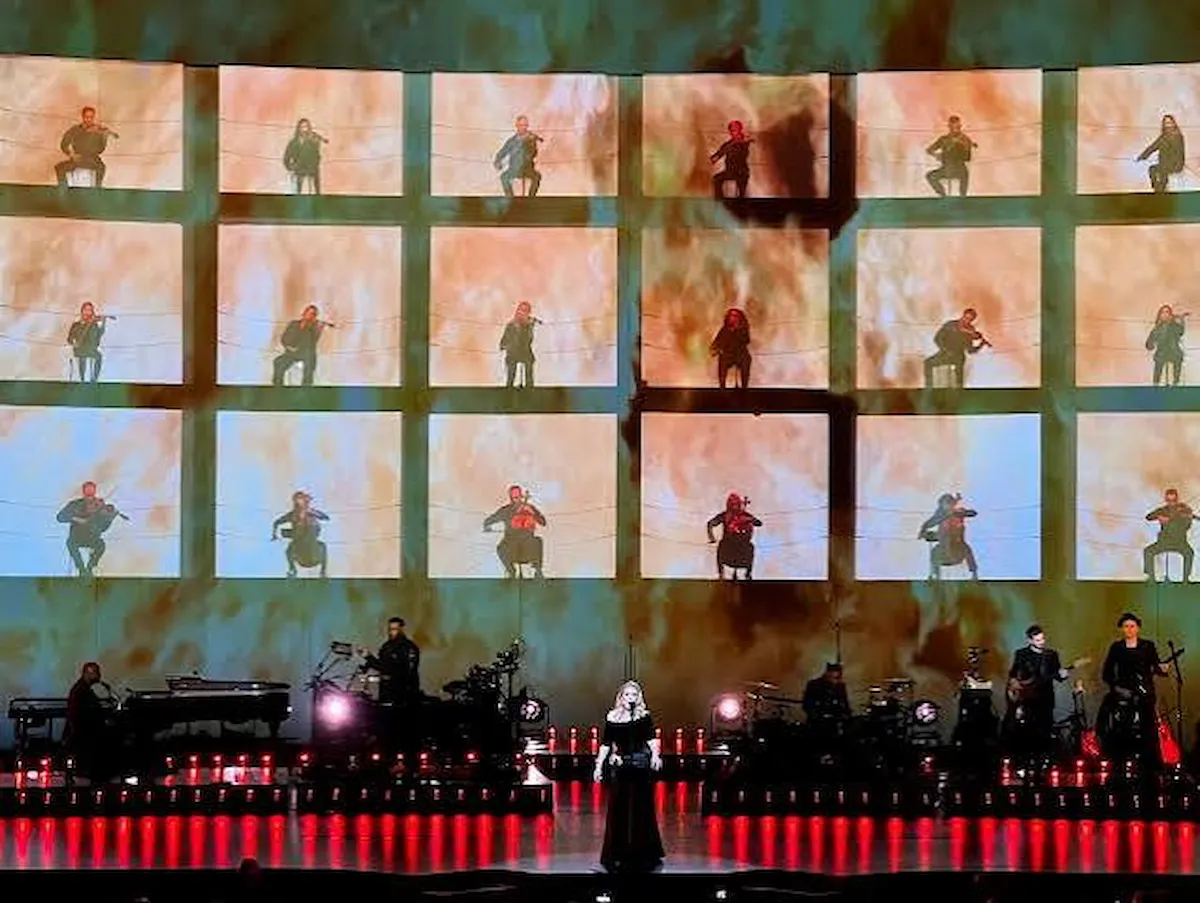
A new form of artistic signature
In an environment where many tracks share similar tools, sounds and production methods, the choice of a live instrumentalist becomes a marker of identity.
A string quartet, a brass section or a few carefully arranged acoustic instruments bring a sonic imprint that is difficult to replicate and help to forge a genuine artistic signature.

An evolution in scoring for the screen
In independent cinema, TV series and contemporary audiovisual projects, the orchestral approach is also evolving. Creators are seeking emotional authenticity rather than grand displays: smaller ensembles, intimate textures and arrangements that serve the narrative.
Orchestration thus becomes a narrative language, capable of evoking an emotion, a memory or a sense of tension with great economy of means.
Human performance as a new artistic value
At a time when automated creative tools are playing an increasingly prominent role, human performance is regaining a special value.
A musician’s gesture, the natural variations of a bow, the breath of a wind instrument or the interaction between several performers bring a living dimension that goes beyond the mere reproduction of a sound. It is this element of humanity that continues to make every recording unique.
What each instrument family brings to a song
Each instrumental family has its own sound palette, emotional range, and way of interacting with a production. Understanding these different personalities makes it possible to choose the right timbres at the right moment and to precisely serve the artistic intention of a track.
Strings
Probably the most versatile family of the orchestra. Strings can support harmony with elegance, create progressive tension through repetitive patterns or tremolos, or carry an expressive melody in the foreground.
Woodwinds
Woodwinds bring a more intimate and organic dimension. Their timbres, close to the human voice in their expressiveness, allow for the creation of colors and melodic lines of great subtlety.
Brass
Brass embodies impact and presence. Their natural power allows them to highlight a key moment, accentuate a progression, or bring an almost physical dimension to a production.
Other
Beyond the main orchestral families, certain rarer timbres such as celesta, harpsichord, or vibraphone offer unique creative possibilities allowing for immediately recognizable musical signatures.
The 3 steps of a collaboration
Our process is designed to accompany each project according to the artist's needs, from the first idea to the final delivery.
Initial Discussion & Artistic Intention
We take the time to listen to your demo, understand the universe of your track, and discuss your aesthetic references. The objective is to define the general intent of the arrangement: which instrument family to prioritize, what role to give them, and how they will integrate into the existing mix.
Writing & Mockup of the Arrangement
The arrangement is entirely custom-written for your song. We produce a mockup to allow you to project yourself into the final result, then refine it as needed and based on your feedback to achieve an optimal version.
Recording & Session Conducting
Once the arrangement is validated, we prepare the scores (conductor and separate parts), suggest renowned professional musicians, whom Zakarius conducts during the recording session to ensure an irreproachable result.
All steps of this process can be carried out remotely: we record the instruments in our studio and deliver stems ready to be mixed.
Frequently Asked Questions
Verba Volant Studio is an artistic direction, arrangement, and orchestration house, dedicated to integrating classical instruments into contemporary music. From the fragility of a solo instrument to the fury of a symphonic orchestra, we put our expertise at the service of your projects.